
The first benchmark results are in for the 2011 MacBook Pro line. Primate Labs posted the first Geekbench results last Thursday, and Macworld followed with its Speedmark 6.5 benchmark suite on Friday.
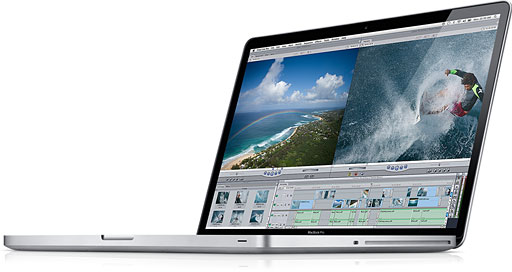 Here’s a brief overview, broken down by display size:
Geekbench
- 13″ 2.4 GHz Core 2 Duo 2010: 3351
- 13″ 2.66 GHz Core 2 Duo 2010: 3645
- 13″ 2.3 GHz dual i5 2011: 5900
- 13″ 2.7 GHz dual i7 2011, 6796
- 15″ 2.4 GHz dual i5 2010: 4866
- 15″ 2.53 GHz dual i5 2010: 4985
- 15″ 2.66 GHz dual i7 2010: 5564
- 15″ 2.8 GHz dual i7 2010: 5910
- 15″ 2.0 GHz quad i7 2011: 8804
- 15″ 2.3 GHz quad i7 2011: 9886
- 17″ 2.53 GHz dual i5 2010: 4980
- 17″ 2.66 GHz dual i7 2010: 5559
- 17″ 2.8 GHz dual i7 2010: 5837
- 17″ 2.2 GHz quad i7 2011, 10026
- 17″ 2.3 GHz quad i7 2011: 10164
Geekbench is designed to measure performance of the CPU and memory. Graphics and hard drive should have little, if any, effect.
In terms of raw processing power, the 2010 15″ 2.8 GHz dual-core i7 MacBook Pro is the only one to outperform a 2011 model. It’s a mere 10 points ahead of the 13″ 2.3 GHz dual-core i5 MacBook Pro, which is a far less costly machine.
The new 2.3 GHz 13″ MBP scores 62% higher than last year’s top end 2.66 GHz Core 2 Duo model, and the 2.7 GHz dual-core i7 version is a whopping 86% faster! Making the move from the antiquated Core 2 Duo processor to the new Intel Mobile Core i5 makes a world of difference.
The new 15″ and 17″ models move from last year’s dual-core Mobile i5 and i7 to Intel’s new quad-core Mobile i5 and i7 chips, and there’s an equally huge increase in raw computing power. Running at a mere 2.0 GHz, the 15″ quad-core i7 measures 49% faster than last year’s fastest MacBook Pro, the 15″ 2.8 GHz dual-core i7 model. The 17″ 2.2 GHz quad-core i7 is nearly 14% faster than that, a bit more than you’d expect from a 10% improvement in clock speed.
At the top, there’s a bit of an anomaly: While last year’s 2.8 GHz 15″ and 17″ models had virtually identical Speedmark scores, that’s not the case this year – unless the 2.3 GHz 15″ report is actually for the 2.2 GHz model. Looking at the 2011 17″ MBP, we see a barely measurable 1.4% boost in performance when moving from 2.2 GHz to 2.3 (based on clock speed alone, you’d expect 4.5%).
Speedmark 6.5
- 13″ 2.4 GHz Core 2 Duo 2010: 106 – 33 fps
- 13″ 2.66 GHz Core 2 Duo 2010: 137 – 34 fps
- 13″ 2.3 GHz dual i5 2011: 140 – 26 fps
- 13″ 2.7 GHz dual i7 2011, 155 – 27 fps
- 15″ 2.4 GHz dual i5 2010: 132 – 63 fps
- 15″ 2.66 GHz dual i7 2010: 151 – 62 fps
- 15″ 2.0 GHz quad i7 2011: 175 – 51 fps
- 15″ 2.2 GHz quad i7 2011: 209 – 81 fps
- 17″ 2.53 GHz dual i5 2010: 137 – 62 fps
- 17″ 2.2 GHz quad i7 2011, 210 – 81 fps
Speedmark reports a composite score based on real world testing using the Finder, Word 09, iTunes 10, iMovie 09, Call of Duty 4, Photoshop CS4, Handbrake 0.94, and Cinebench R11.5. These tasks variously stress the CPU, memory, drive bus, and graphics processor. In theory, they are a more realistic measure of a model’s performance than raw component benchmarks.
Based on these numbers, the 13″ 2.3 GHz dual-core i5 MBP slightly outperforms last year’s 2.66 GHz Core 2 Duo model. However, that number is weighted by the fact that the Intel HD 3000 graphics in the 2011 models doesn’t do nearly as well at gaming (as measured using Call of Duty 4) as the Nvidia GeForce 320M in the 2010 model. The 2010 13″ MBP scored 33-34 frames per second, while the 2011 edition only achieves 26-27 fps. The 13″ MacBook Pro is not the one to choose if gaming is your forte.
The quad-core i7-based 15″ and 17″ models absolutely toast last year’s dual-core i5 and i7 models. The 2.0 GHz quad-core i7 benchmarks 9.3% higher than last year’s 2.66 GHz dual-core i7, this despite having a measurably lower frame rate in Call of Duty 4. (Unfortunately, Macworld never benchmarked the 2.8 GHz 2010 machines.)
Moving to the 2.2 GHz quad-core MacBook Pros, we see a 38% improvement over last year’s 2.66 GHz dual-core i7, along with significantly higher frame rates.
Bear in mind that the 2011 models all use Intel’s brand new HD 3000 graphics, and the 15″ and 17″ models also made the switch from Nvidia GeForce GT 330M to AMD Radeon HD 6490M and 6750M graphics processors, and it’s possible that the drivers for these new GPUs are not as optimized as the ones used by OS X for last year’s MacBook Pros.
Conclusions
Looking at the numbers, the general conclusion is that the 2011 models provide a significant and measurable improvement over the 2010 models. The big exception is gaming, where the 2010 13″ MBP with its discrete graphics processor handily outperforms the 2011 model and its integrated Intel HD 3000 graphics, and surprisingly the 2011 15″ 2.0 GHz quad-core i7 model, which measures 11-12 fps lower than last year’s.
That said, most gamers are going to want something bigger than a 13″ screen, so the integrated graphics should not be a big issue for most of Apple’s potential market. The 2.2 GHz 15″ and 17″ models have plenty of graphics horsepower for gaming if that’s your cup of tea.
The biggest disappointment is the 2.3 GHz build-to-order upgrade available for the 2.2 GHz 15″ and 17″ models. It adds $250 to the price, yet Geekbench found it offered an insignificant boost in speed. For that matter, even if it did provide the expected 4.5% power boost, it would be hard to justify the additional 11% purchase price for the 15″ MBP. Further, a 4.5% (or 1.4%) boost in raw processing power is not going to result in the same boost in productivity. For most users, the small difference may as well not exist, and we can’t recommend it unless you really push things to the limit and absolutely need to squeeze out the maximum performance from your MacBook Pro.
Keywords: #early2011macbookpro #early2011macbookprobenchmarks
Short link: http://goo.gl/mFV7pt
searchword: early2011macbookprobenchmarks
