
My first computer was a 386 PC loaded with an elegant, almost forgotten program called GeoWorks. It was an impulse purchase in the fall of ’92, during a personal crisis. I badly wanted a distraction, something I could throw myself into. I dropped $1,300 on a credit card, carted home three boxes in my Honda, and began a very long, complicated relationship with these machines.
Like a lot of new computer users in the pre-internet era, I learned what I needed to know from magazines. The best of the lot was called first DOS Resource Guide and then DOS World.
DOS World was utterly unlike most PC magazines, then and now. It had virtually no advertising; it had tons of content; it was obsessively “practical” in a hackerish way. (Build Better Batch Files Now! Make the C Prompt An A+ Tool!)
Anyway, as Windows rose and DOS fell, DOS World morphed into Practical Windows. If anything, the magazine got better – as much of a kludge as Windows 3.x was, it was also fertile ground for tinkering.
Then came Windows 95. About a year later, Practical Windows noted that while it would continue to deal with 3.x, readers just didn’t seem to have many questions left.
Mind you, one could continue to use Windows 3.x. With enough time and patience you could probably find new uses and efficiencies, but it would be a lonely life – like adding a turbocharger to an AMC Pacer. Your friends might admire your persistence as they whizzed by you in their SUVs, but they would unavoidably think you, well, a little strange.
(Required Disclaimer: Yes, I know Windows 9x is still a mess in the eyes of many Mac users. And yes, Practical Windows continues to this day, merrily helping Wintel users hack away at their systems.)
I’m thinking about Windows these days because of OS X – and why it apparently makes so many Mac users uncomfortable.
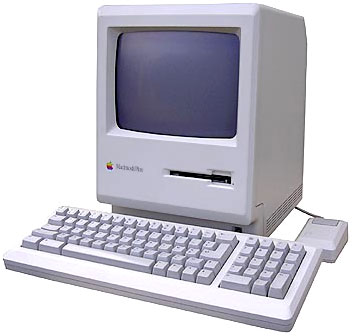 Have you ever wondered at the sheer amount of hacking that takes place on the Mac side? I do. Remember way back when Steve Jobs wanted to make a computer that was an appliance, a machine that you couldn’t even open.
It didn’t turn out that way. People were struck by the beauty of the Mac, fell in love, and did what people in love usually do: They set about making it their own. The fact that the Mac was (and is) a tough machine to change made it all the sweeter.
The tension between Mac-as-appliance and Mac-as-hackable machine is a main reason Macs continue to captivate people. For some people, customizing a Macintosh – whatever the practical motive to begin with – ends up feeling like they’re working out their own modest variation on a work of art, like someone in a wood shop producing a new version of a Shaker table.
Sixteen years of ResEdit hacks, C tricks, add-on utilities, VRAM upgrades, hardware cards, and clone experiments created a sense of ownership in the Mac community. All of those “add-ons” became a way for users to say to Apple, Yes, you own Macintosh. But we do, too.
And that is exactly why people worry about OS X. It endangers that sense of ownership in a way that extends beyond practical questions like, will my hardware run it? (Probably not, it seems, is the answer for most Low End Mac readers.)
With some successes and some missteps, the Jobs-era Apple has reasserted the company’s control of Macintosh.
That’s pretty much to the good; the weakened Apple of 1996 could not have continued, regardless of user inventiveness and loyalty.
On the other hand, in the dance between Apple and the rest of us, Apple needs to let the users lead from time to time.
What does that mean in practical terms? I’m not sure – after all, computer platforms are notoriously transient, and Apple has been more stable than most.
However, I have a suggestion: Apple could continue a modest amount of work on OS 9.x, to explore what can still be done within its confines, and the company could encourage independent developers.
The best analogy I can come up with is from jazz, where there has been a 20+ year reinvestigation of older forms of the music, and where progress is increasingly defined as an appreciation that sweetens over time for what is already at hand.
Instead of viewing the classic interface and accumulated code – with its weaknesses and peculiarities – as a burden to be managed and then dispensed with, it might be more appropriate to think of it as the shared history of a long marriage, to be acknowledged and honored and preserved, as a way of saying, Yes, we know you own Macintosh too. Thanks.
Keywords: #machacks #maccustomization
Short link: http://goo.gl/FDjB9E
searchword: macownership
