
Second Class Macs are Apple’s somewhat compromised hardware designs. For the most part, they’re not really bad – simply designs that didn’t meet their full potential, such as the PowerBook 5300, Apple’s first PowerPC-based PowerBook.
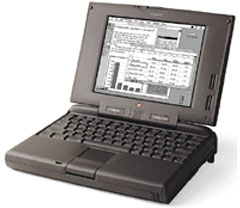
Originally designed to use Lithium-ion batteries, Apple recalled the 5300 after some of the new batteries burst into flames on the assembly line. Not only was this an embarrassment to Apple, but the PowerBook 5300 became the butt of many jokes – even though none of the troublesome batteries ever made it to market.
Switching to NiMH (nickel metal hydride) batteries solved the problem, but then there was the motherboard to address. A problem with the Sleep setting didn’t reduce power sufficiently, reducing the maximum time in sleep mode from expectations of over a week to about four days.
On top of that, the power supply wasn’t robust enough to handle everything you could put into the expansion bay. And the connector on the AC adapter could break, making it impossible to charge the batteries – or run the computer.
As if that weren’t enough, the 5300 and it’s 68040-sibling, the PowerBook 190, had problems with the case, especially the hinge between the main computer and the screen. Flecks of dark gray plastic were soon called “PowerBook droppings”. Over time, enough plastic could be lost that the 5300 needed to go in for service. (Thank you, Apple, for a seven year warranty on this problem!)
Some of the system bugs were solved simply by upgrading from System 7.5.2, which shipped with the computer, to 7.5.3 or later. Reports are that the 5300 is rock solid under Mac OS 8.0 and later. Also, the improved emulation of Speed Doubler really helps performance of the pedestrian IDE hard drive.
Apple had intended to design a PowerBook around the PowerPC 603 processor but soon discovered that the on-chip cache (level 1 cache) was inadequate for decent 680×0 emulation needed to run older software. The 603e doubled the size of the L1 cache, making it a much better performer with old software and the right choice for the first PowerPC PowerBook. (See Macintosh CPUs, Part 2, for more details on the 603 and other PowerPC chips.)
However, Apple made a serious design compromise by designing the 5300 with no level 2 (L2) cache – and no way of adding one. Even a relatively small 256 KB L2 cache can boost performance on the order of 30%. Without that cache, the 5300 was slower than anyone expected a 100 MHz or 117 MHz machine to be. (Another blow to the already soiled reputation of the 603.)
Details
- introduced 1995
- requires System 7.1.1 or later
- CPU: 100 or 117 MHz PPC 603e
- ROM: 2 MB
- RAM: 8-32 MB, expandable to 64 MB
- displays:
- 640 x 480 9.5″ grayscale active matrix with 16 shades
- 640 x 480 10.4″ color dual scan with 16-bit color
- 640 x 480 10.4″ color active matrix with 16-bit color
- 500 MB, 750 MB, or 1.1 GB hard drive standard
- ADB: 1 port for keyboard and mouse
- serial: 1 DIN-8 RS-422 port on back of computer
- PC Card slots: 2
- SCSI: HDI30 connector on back of computer
- Weight: 6.1-6.4 pounds
Other Resources
- The 10 Worst Macs Ever Built, Remy Davison, Insanely Great Mac, 2001.08.06
Keywords: #pb5300 #roadapple
Short link: http://goo.gl/ZvVE4i
searchword: pb5300

I still use a PowerBook 5300 rather frequently, and it’s not that bad. I have written about my experience and I think that, while it’s not one of the greatest Macs ever built, it’s not one of the worst either.
RM
Agreed. That’s why it gets the “Compromised Mac” label instead of “Road Apple”.