
Before I describe my experiences with the Mac OS, I would first like to discuss the history of the Mac operating system and why it is important.The Mac OS is older than Microsoft Windows, and it’s seen considerably more releases than its counterpart. The first version, then simply called System 1.0, appeared in 1984. The first edition of Windows was released in 1985, over a year-and-a-half later.
The original Mac OS is seen by many as the first graphical user interface that breached the mass market. This is partially true, but it certainly was not the first ever publicly available Graphical User Interface (GUI).
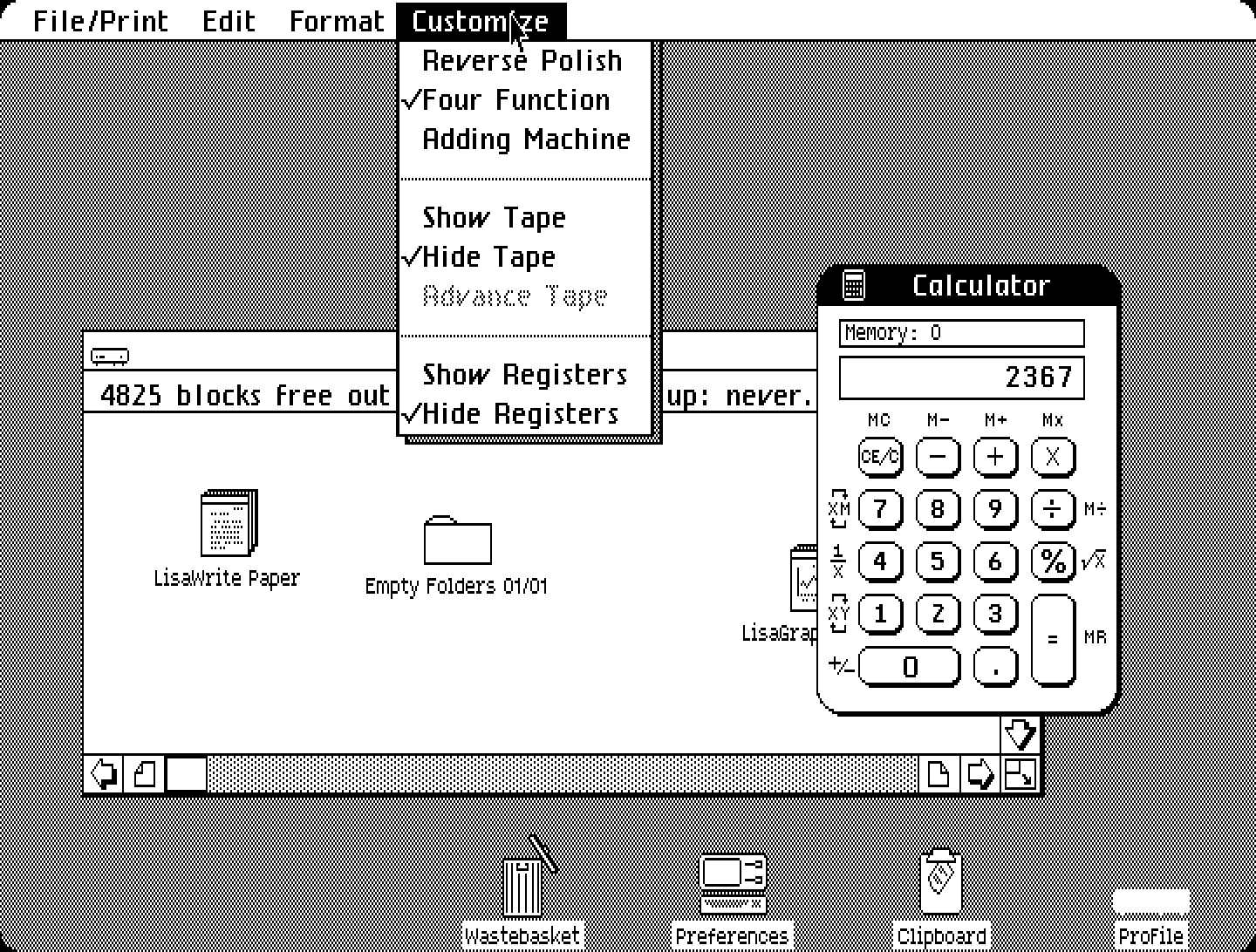
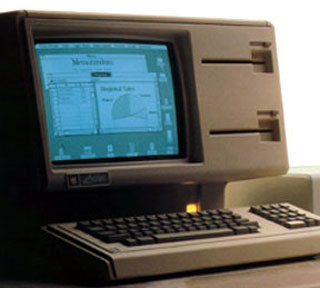 The Lisa Office System
From a purely Apple perspective, the Mac OS has its roots in an earlier Apple computer, the Lisa. The Lisa was a revolutionary computer that was the one of the first to sport a GUI as its connection to the end user. It was released in 1983, one year before the first Mac, and despite its groundbreaking design, it was overpriced (it cost £10,000 in 1983!) – and doomed to failure because of it.
The Lisa Office System was the name of its GUI, and the future Mac System 1.0 would take many of its interface design concepts from the Lisa. So although the Mac took the GUI idea and made it popular, the Lisa was the trailblazer that made it possible.
Xerox PARC
But the concept of a GUI was not created at Apple’s R&D labs; it was invented by Xerox in the 1970s at their Palo Alto Research Center (PARC). Xerox founded PARC to serve as a base for new ideas that could in turn be marketed and sold as consumer products.
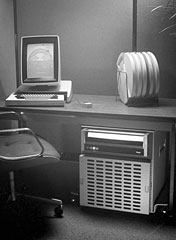 The biggest thing to come out of PARC, shortly after its founding, was a new computer designed by the PARC engineers that completely rewrote the book of what a computer should be and how it should operate. This computer was the Xerox Alto – and a world shattering piece of hardware it was. It was the first computer to use a bit-mapped display to show graphics – and to use a mouse to operate its GUI. It established the desktop metaphor we now take for granted in computing, as well various other technologies such as ethernet (another PARC innovation).
The PARC team never intended for this revolutionary machine to be mass marketed, and therefore its use was restricted to university labs and similar institutions. Bear in mind that was all done in 1973, long before the term “personal computer” was widely known (the first three preassembled personal computers – the Apple II, Commodore PET, and Tandy/Radio Shack TRS-80 – came to market in 1977).
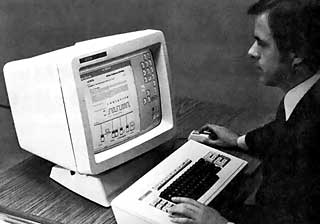
Xerox Star
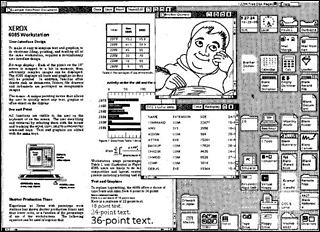
The Xerox Star desktop
It took a 1979 visit from Steve Jobs of the fledgling Apple (then five years old) for anyone to realize the potential in the GUI as a mass market device, and subsequently the Lisa was created.
In 1981, Xerox released their own home computer, the Star, which was based upon the research of the PARC team. This was the very first home computer with all the features that we know associate with the PC and Mac, but ineptitude on the part of Xerox to market it properly (as well as a hefty £10,000 price tag) doomed it to obscurity.
The Macintosh
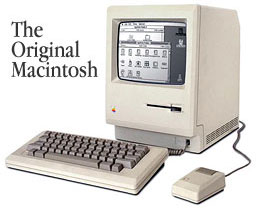
All of this led to the birth of the Macintosh, the first successful computer to incorporate the mouse and the GUI, with its series of office metaphors, to make it easy to use. It may not have been the first computer to use these concepts, but it was the first to introduce them to “the rest of us”.
Because of this, the original 1984 Macintosh was revolutionary. It’s difficult to imagine in this day and age, but just think in 1984, trying to show someone with no knowledge of computers, how to use a peculiar device called the mouse. That was the very task that the Mac excelled at performing.
The Mac system software itself has a long and tumultuous history that I won’t describe in detail here. Suffice to say that since its first release in 1984, it has changed considerably and gone through many guises to get where it is now.
What is now called the Classic Mac OS began in 1984 and ended with the release of Mac OS 9.2.2 in 2001. Through its career, the Classic Mac OS took everything from the previous version and added new features and modern technology to it. The end result was a chaotic mix of old and new technology that, despite it’s somewhat convoluted development, came to be a reliable and stable operating environment still used today.
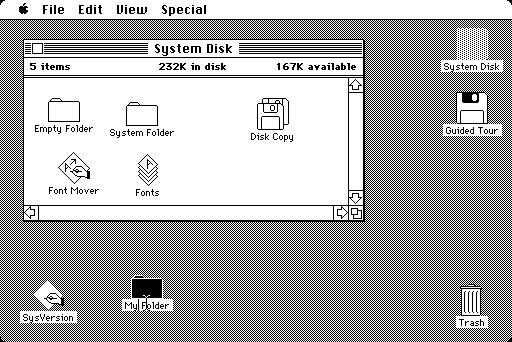
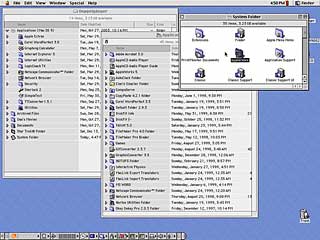
Mac System 1.0 (1984) and Mac OS 9 (2004)
Mac OS X
The modern incarnation of the Mac OS began in 2001 with OS X 10.0 Cheetah. It was born out of the necessity to bring the Mac into the 21st century with a completely new and modern operating system built from scratch. It shares no code with the Classic Mac OS and bears no lineage with it, save for the name. For all intents and purposes, it’s a completely different piece of software.
 Mac OS X has its own history that begins in the form of another OS called NeXTstep from a company called NeXT Computer, which was founded by none other Apple’s own co-founder Steve Jobs.
 Steve Jobs left Apple in 1985 for reasons that could fill a novel, and when he did he founded a new company, named it NeXT Computer, and set about creating a new series of computers that would outdo the Macintosh for all its innovations.
When these new computers finally appeared (the first one in 1988), they contained an advanced operating system called NeXTstep that had many new ideas. These included true multitasking, a 3D appearance for buttons and icons, system-wide drag and drop, and properties dialog boxes, as well other innovations “under the hood”.
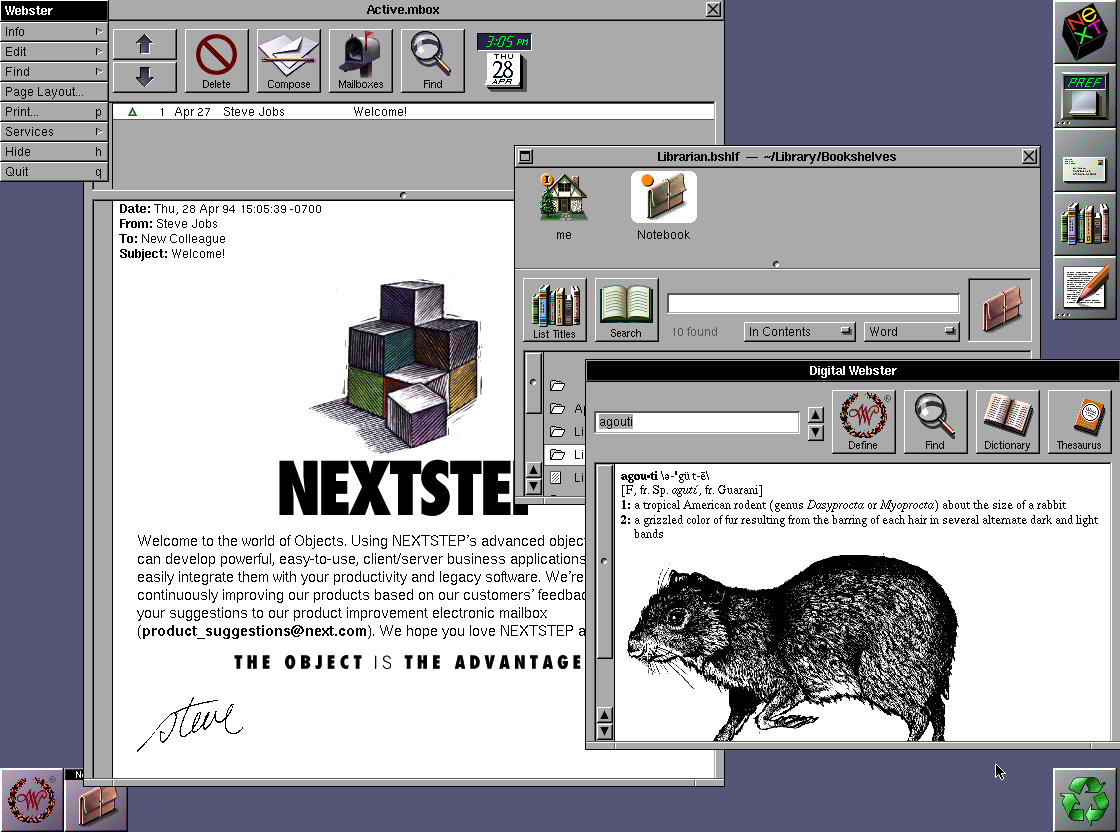
The NeXT computers themselves were highly advanced but not very successful (a common theme of new GUI technology), and NeXT subsequently was purchased by Apple in 1996. At this time Apple, who were struggling to update their own aging Mac OS, wanted to buy new technology with which to compete with Microsoft. Their search led them to NeXT, which had this technology, and the deal was done. This brought Steve Jobs back to Apple, and immediately thereafter the R&D labs set about dissecting NeXTstep and incorporating its ideas and concepts into a new highly advanced Mac OS. This became Mac OS X.
Trevor Wale originally wrote this as part of a project at school. We’ve adapted it for use on Low End Mac and broken it down into a series of articles encompassing his years with Windows and his switch to the Macintosh. dk
Next: My Experiences with Mac OS X
Keywords: #nextstep #macos #classicmacos
Short link: https://goo.gl/V5YSS5
