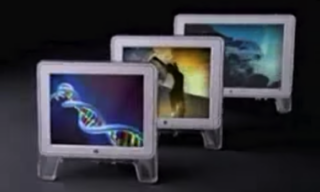
Nearly a quarter-century ago, the second generation Quicksilver Power Mac G4 was announced alongside an updated, brighter 20-Inch Apple Cinema Display. The 2002 Quicksilver Power Mac G4 started at 800 MHz for the base model at $1,599 USD, with a single processor.
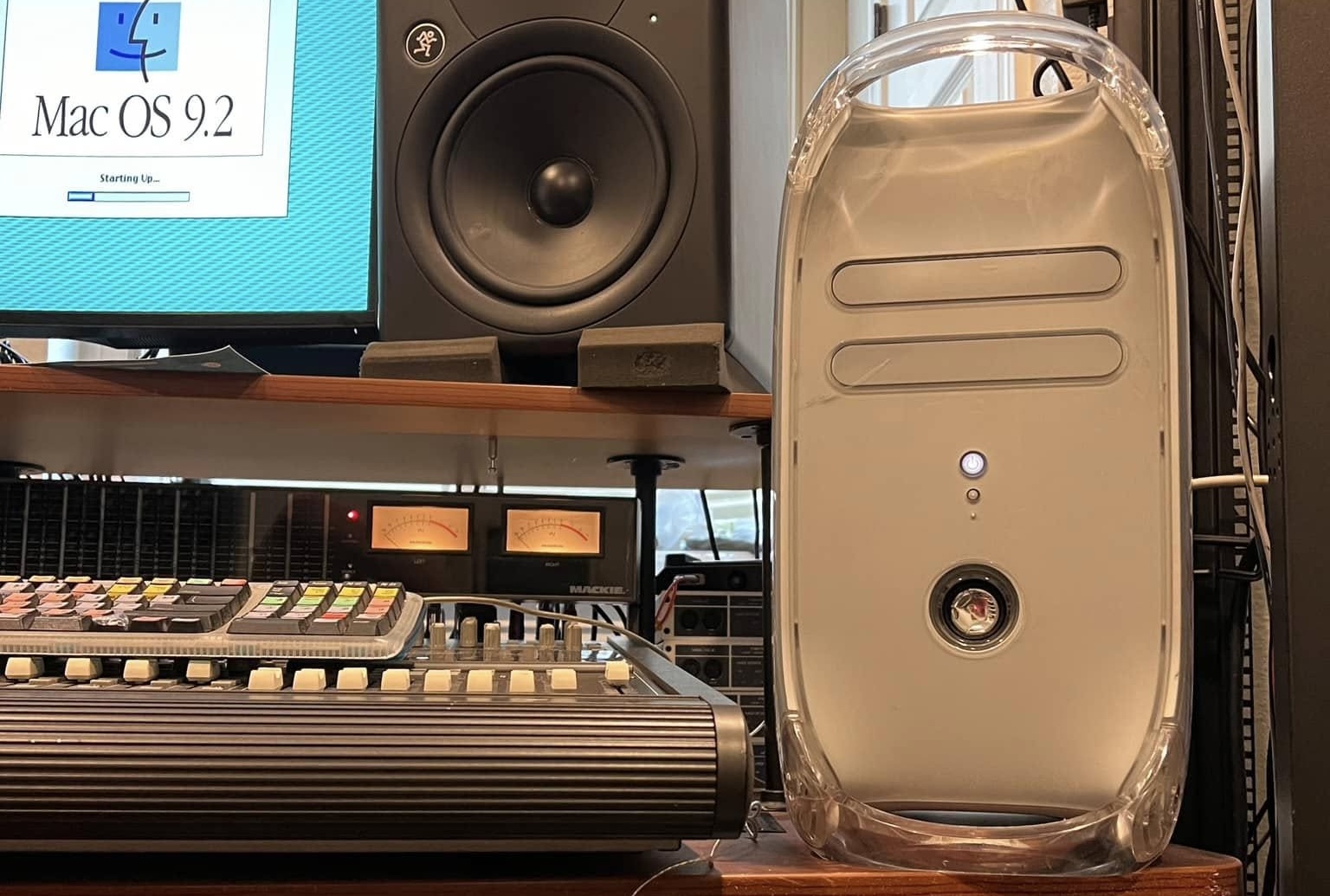 (Pictured: A community member’s Quicksilver used as a Pro Tools rig in 2025)
They doubled this 1 GHz performance with a Dual CPU 1 GHz model for $2,999 USD, with the next fastest model being a single CPU 933 MHz G4 for $2,299. Apple touted this computer as having a total of “four USB ports”, however, this was including the two on the keyboard – there are only two USB ports onboard. When a USB mouse is plugged in, one USB port is freed up on the keyboard, and one is left free onboard.
Some key points about the ’02 Quicksilver
- First Macs to officially support hard drives over 128 GB on the built-in Ultra ATA/66 (ATA-5)
- Reader reports indicate that the earlier Quicksilver model sometimes does so as well, depending on the logic board installed.
.
- Reader reports indicate that the earlier Quicksilver model sometimes does so as well, depending on the logic board installed.
- The Quicksilver 2002s also have faster video cards: G4/800 ships with an ATI Radeon 7000, while the two faster machines have nVidia GeForce4 with 64 MB of video memory.
. - These max out at 1.5 GB PC133 SDRAM (3.3V, unbuffered, 64-bit, 168-pin, 133 MHz) in 3 DIMM slots.
|
|
 |
Why 1 GHz was significant
After years of the industry measuring CPU clock speeds in MegaHertz (MHz), the industry had finally reached a point where performance could be measured in GigaHertz (GHz), or, 1,000 MHz – an order of magnitude over 80s Macs which mostly had CPUs in the single MHz range.
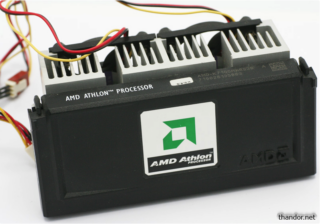 . First 1 GHz AMD CPU – Athlon K7 1000 |
|
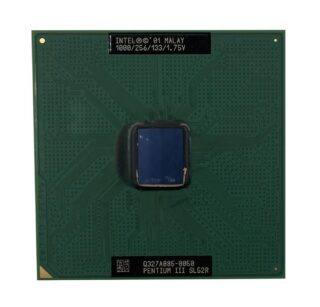 First 1 GHz Intel CPU – Pentium III 1000 MHz
This was also later in the time of the PowerPC vs. Intel competition, a time slightly before Apple saw the writing on the wall with the “performance per watt” of Intel chips vs the IBM G5 in 2003, prompting them to later go with intel in 2006. They weren’t unprepared, however, as Apple had been secretly working on project “Marklar”, an Intel-port of OS X dating as far back as 2001.
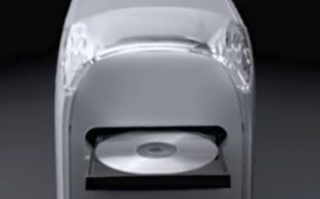
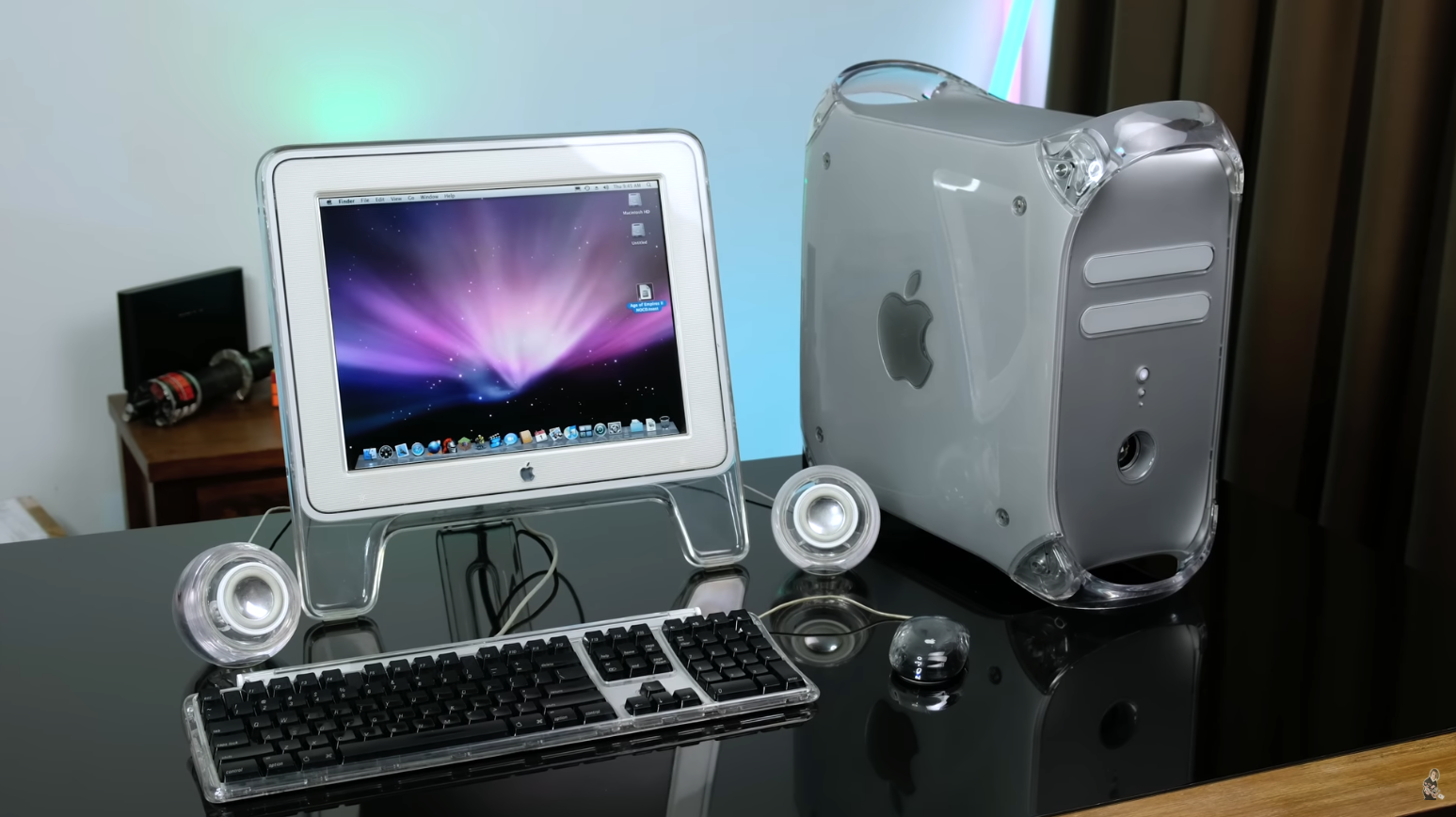 (Pictured: Apple’s Pro Desktop From 20 Years Ago! – Psivewri; YouTube – URL)
In 2009 – Brooke Crothers of CNET News stated that the “PowerPC platform never lived up to the hype” and “the PowerPC platform had really failed long before 2005.” The evidence: the fact that Apple switched to Intel in 2006 and that some of the first-generation dual-processor G4 Power Macs ran hot.
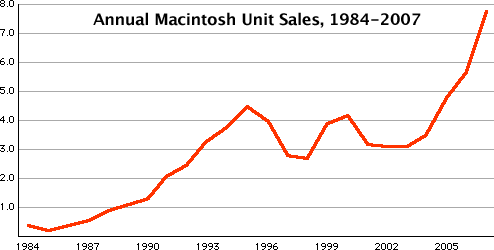
(Macintosh sales during the PowerPC era (1994-2005) averaged 3.5 million units per year.)
Apple adopted the PowerPC architecture in 1994 and used it through 2005. Although the Mac has had incredible sales growth since the transition to Intel in 2006, the 12-year PowerPC Era also saw Apple set sales records. Approximately 42.8 million PowerPC Macs, over a 12 year period.
- See our article: PowerPC Architecture Was Not a Failure – Daniel Knight – 2009.02.16
Another benefit of having reached the 1 GHz marker was public perception. Since PowerPC chips ran at lower clock speeds than their intel or AMD counterparts despite being equally (or more) powerful, G4’s could finally be marketed with a significant term related to the increase in performance. Public perception, however, was that PowerPC chips were slower due to the lower clock speeds.
Just under a year later in early January 2003, Apple unveiled their first 1 GHz chip in their mobile laptop lineup – the 12 & 17-Inch PowerBook G4s.
My time with a Quicksilver G4
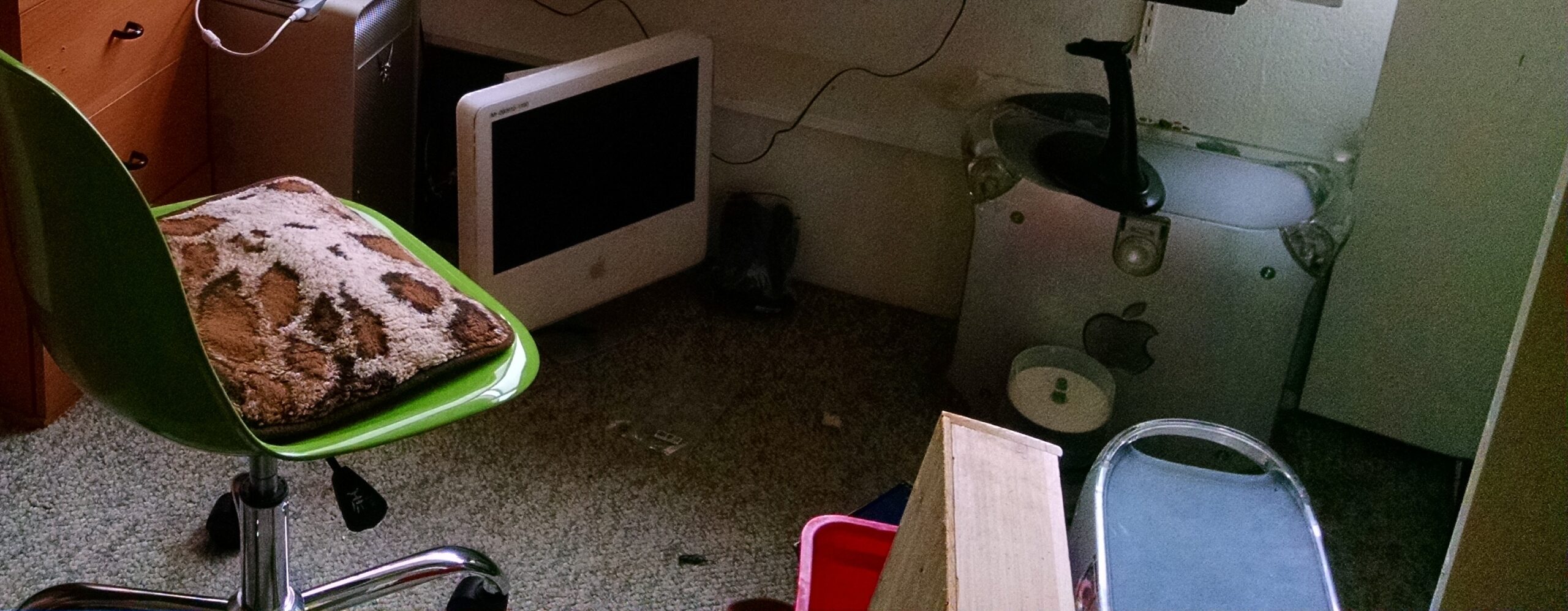
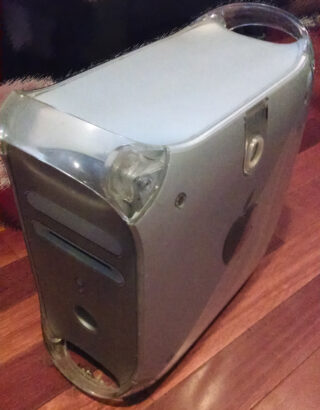 I wasn’t a heavy user of any Quicksilver Power Mac G4, although I had the exact model this article talks about – a Dual 1 GHz. I picked this one up one cloudy afternoon when I was still in high school years ago off of Craigslist, and sold it sometime in 2016.
I remember it as a fancier Power Mac G4, as I had gotten used to the look of the AGP graphics model (and other older ones) at the time. Despite having this in my collection, I was already using a Dual 2.0 G5 as a daily driver for a couple years at this point and the upgraded Sawtooth G4 was also sidelined. I was’t particularly interested in investing in this Quicksilver, as I was gearing up to buy my first Intel Mac. Still, it looked nice.