Low End Mac Reader Specials
TypeStyler For Mac OS X is Now Shipping! Download The Free Fully Functional 60 Day Tryout at www.typestyler.com
OWC: Mercury On-The-Go FW800+USB2 up to 1.0TB. Bus Powered, no external power supply needed. Macworld Editors Choice, CNET Very Good Starting from $99.97, 500GB $159.99. Click here
Don't install Parallels to play poker online! Poker Mac will show you how
to download and install a native Mac poker application such as Full
Tilt Poker Mac.
Laptop Hardware Provided by TechRestore - Overnight Mac & iPod Repairs.
Compare products like desktop computers, apple laptops, apple macs, and LCD Monitors side by side! All the information and reviews to make the best purchasing decision for new mobile phones, sat nav systems, or MP3 players. The Ciao online shopping community makes searching products easy for you.
Mac Musings
Rebranding: They're All Macs Now
Dan Knight - 2007.04.25 - Tip Jar
When Steve Jobs left Apple in 1985, there were only two Macintosh computers: the original 128K and the 512K "Fat Mac".
When he returned in 1997, there were PowerBooks, Power Macs, and Performas - each model name followed by a four-digit number. Jobs decided to simplify and focus the product line with four quadrants: a pro desktop, a pro notebook, a consumer desktop, and a consumer notebook.
Quadrants
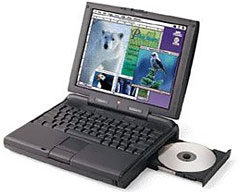
Apple dropped the four-digit numbers with the release of the PowerBook G3 and Power Mac G3 in November 1997. These filled the pro notebook and pro desktop quadrants, but Apple's consumer desktop was still months off.
Jobs introduced the iMac in May 1998, garnering incredible amounts of free publicity for a computer that wouldn't even ship for three months. This was the first completely new Mac under the Jobs regime; he launched the project immediately upon returning to Apple.
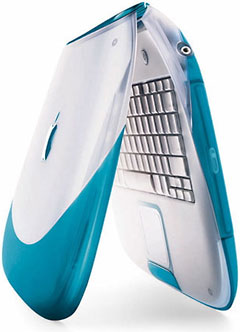
The final quadrant remained empty until July 1999, when Jobs unveiled the iBook, which shipped in September.
Too Simple?
For better or worse, Apple stuck with this naming convention: The pro desktops were all called Power Macs; the pro notebooks, PowerBooks; the consumer desktops, iMacs; and the consumer notebooks, iBooks.
There were two very different models named Power Mac G3, and far more bearing the Power Mac G4 name. The number of Power Mac G5 models fell between there.
There were four different PowerBook G3 models, with two revisions of the WallStreet, followed by four generations of titanium PowerBooks G4s - and several generations of 12", 15", and 17" aluminum PowerBook G4s.
On the consumer front, there were four tray-loading G3 iMacs (two of them in five different colors), four generations of slot-loading G3 iMacs (with 3 or more models per generation), three generations of G4 iMacs, and three generations of G5 iMacs. And Apple simply called all of them iMacs.
Likewise, the clamshell iBook (4 models) gave way to the dual USB iBook (five generations and two screen sizes), which in turn were replaced by several generations of 12" and 14" G4 iBooks.
The only model that threw a wrench into the works was the Cube, which Jobs envisioned as something of an executive workstation. Everything else fit into the four-quadrant model.
The New Paradigm
One of Jobs' goals was to have every Mac include "Mac" in its name. Thus, the Performa 6400 begat the Power Mac 6500, the new education model was called the eMac, and the smallest, least expensive Mac ever was named the Mac mini.
With the transition to Intel in 2006, Apple abandoned two of the best known brands in personal computing. The first PowerBooks had been introduced in 1991, and they established the design of all future notebook computers. It was perhaps the best known brand of notebooks when the last PowerBooks were discontinued in 2006.
The other was the Power Mac, which was introduced with the PowerPC 601 CPU in 1994. For 12 years, the Power Mac was Apple's flagship model.
They're All Macs Now
Apple broke the quadrant model with the introduction of the eMac, which gave Apple pro, consumer, and education desktops. It shattered the quadrant model with the Mac mini, which gave Apple two completely different consumer lines.
But the important change was the name: Every current Mac has "Mac" in it's name - Mac Pro, iMac, Mac mini, MacBook, and MacBook Pro.
Just as every Mac was called a Mac when Jobs left Apple in 1985, every Mac was called a Mac by the end of 2006. And for those who doubt the Mac's future, this should erase all doubt. Apple has gone out of its way - even to the point of killing off a very successful brand - to pull all of its desktop and notebook computers clearly under the Mac umbrella.
.
Dan Knight has been using Macs since 1986, sold Macs for several years, supported them for many more years, and has been publishing Low End Mac since April 1997. If you find Dan's articles helpful, please consider making a donation to his tip jar.
Recent Mac Musings
- IDE Is Dead; Long Live SATA!, 11.04. SATA has displaced parallel ATA. While IDE hard drives haven't disappeared, the best deals are in SATA hard drives.
- The Future of Personal Computing: Personal Servers and Low Cost Portables, 11.02. With WiFi everywhere, virtual network computing, and remote access, your iPhone, iTouch, iTablet, or MacBook Air becomes a gateway to your home or office computer.
- The Late 2009 Mac mini Value Equation, 10.21. We called the Mac mini 'the best value in desktop Macs' two months ago, and the refreshed Mac mini only improves that value.
- The Late 2009 MacBook Value Equation, 10.21. The redesigned consumer MacBook uses unibody construction, gains LED backlighting and battery life, but loses FireWire.
- More in the Mac Musings index.
Links for the Day
- Mac of the Day: 17" iMac G4/800 MHz, July 2002 - The iMac 'grows up' with a 17" 1440 x 900 display.
- Group of the Day: LisaList supports Lisa users.
- November 8 in LEM history: 99: OS 9: I think I like it - 01: The simplified Mac life - Soured on Windows - Flea market Mac - 02: Little room for improvement in new 'Books - Combo drive upgrade for iceBooks - 04: Re-Porter - 05: Fix the old iMac or buy a Mac mini? - Apple's Copland project - 06: MacBook Core 2 - MacBook value equation - Cheap is as cheap does - 07: Problems with Classic mode in Tiger - The G4 Power Mac that won't run Leopard
- Support Low End Mac
Recent Content on Low End Mac
- Quad-Core CPU Makes Sense in MacBook Pro, OS X 10.6 Causing Overheating, Overseas Power, and More, The 'Book Review, 11.06. Also Late 2009 MacBook reviewed, how to add RAM to new MacBook, 18.4in Acer notebook used Intel i7, and SanDisk SSD chosen for Sony VAIO X.
- Dumping Macs for Google Apps, SSD in iMac, Late 2009 iMac Performance Problems, and More, Mac News Review, 11.06. /newsrev/09mnr/1106.html
- WiFi Paranoia, iMac-O-Lantern, Magic Mouse Does Click, Free Clipboard Managers, and More, Charles W. Moore, Miscellaneous Ramblings, 11.05. Also strange time stamps, problem with ColorIt on Intel Mac, and the story behind OS X 10.5.4 install discs.
- QuickTime X in Snow Leopard Imports, Trims, and Publishes Video Quickly and Easily, Alan Zisman, Zis Mac, 11.04. The long, slow process of importing video into iMovie to edit it, then render it to another format, is history as QuickTime X does that much more quickly.
- More links in our archive.
Recent Deals
- Best Mac Pro Deals, 11.03. Used 2.66 GHz 4-core, $1,300; 3.0 8-core. $2,299; refurb 2.66 4-core Nehalem, $2,149; 2.93, $2,549; 2.26 8-core, $2,799; 2.93, $4,999.
- Best iPhone Deals, 11.03. New 8 GB iPhone 3G, $$99; refurb 16 GB 3GS, $149; new, $199; 32 GB, $299.
- Best 12" PowerBook G4 Deals, 11.03. Used 867 MHz SperDrive, $348; 1 GHz, $499; 1.33 Combo, $298; SD, $559; 1.5 Combo, $448; SuperDrive, $589.
- Best Power Mac G3 and PCI Video Card Deals, 11.02. Used beige 300 MHz, $25; G4/366, $49; blue & white 350, $80; 400, $90; 450, $105; PCI video cards from $15; shipping additional.
- Best Power Mac G4 and AGP Video Card Deals, 11.02. Used 400 MHz, $50; 733 MHz, $69; 933 MHz, $209; 1.25 GHz dual, $299.
- Best 15" MacBook Pro Deals, 11.02. Used 2.0 GHz, $800; 2.2, $900; 2.4, $1,000; refurb 2.53, $1,449; 2.66, $1,699; 2.8, $1,949; 3.06, $2,169; new 2.53, $1,579; 2.66, $1,799; more.
- Best Mac mini Deals, 10.30. Used 1.33 GHz G4 mini, $379; 1.42, $389; 1.5, $419; 1.83 GHz Core Duo, $350; Core 2, $439; new 2.26 GHz nVidia, $580; 2.53 GHz, $770; Server, $990.
- Best G4 iBook Deals, 10.30. Used 12" 1.07 GHz Combo, $225; 1.33 GHz, $298; 14" 1 GHz, $349; 1.33 GHz, $398; 1.42 GHz SuperDrive, $498.
- Best Classic Mac OS Deals, 10.30. System 6.0.8 floppies, $10; 7.1, $12; 7.5, $20; 7.5 CD, $4; 7.6 $13; 8.1, $11; 8.5, $20; 8.6, $90; 9.0, $20; 9.2.2, $30.
- More deals in our archive.
About LEM | Support | Usage | Privacy | Contacts
Navigation
Used Mac Dealers
Apple History
Video Cards
Email Lists
Favorite Sites
MacSurfer
MacMinute
MacInTouch
MyAppleMenu
InfoMac
Macs Only!
The Mac Observer
Accelerate Your Mac
RetroMacCast
PB Central
MacWindows
The Vintage Mac
Museum
DealMac
DealsOnTheWeb
Mac2Sell
ramseeker
Mac Driver Museum
JAG's House
System
6 Heaven
System 7 Today
the pickle's Low-End
Mac FAQ
Abandonware
Petition
Mac vs. PC Info
Affiliates
The Apple
Store
Mac
Connection
B&H
MacMall
TechRestore
ExperCom
Crucial
Memory
batteries.com
Advertise
MacMinute
MacInTouch
MyAppleMenu
InfoMac
Macs Only!
The Mac Observer
Accelerate Your Mac
RetroMacCast
PB Central
MacWindows
The Vintage Mac
Museum
DealMac
DealsOnTheWeb
Mac2Sell
ramseeker
Mac Driver Museum
JAG's House
System 6 Heaven
System 7 Today
the pickle's Low-End
Mac FAQ
Abandonware
Petition
Mac vs. PC Info
Mac Connection
B&H
MacMall
TechRestore
ExperCom
Crucial Memory
batteries.com