I may have mentioned that my computer gaming days extend back aways. Before I discovered networked flight sims, first-person shooters,and real-time strategy games . . . well, there weren't any ofthose kinds of games back then, really. Games, except arcade games andsimulators, were almost all turn-based, and if there was anymultiplayer support at all, it was almost always only of the "hot seat"type.
There were giants in the earth in those days. Some are long gone,such as the excellent series of flight sims from Lucas Arts andSierra's Dynamix. Others, like SimCity by Maxis, were the dawning offranchises that exist to this day.
Master of Orion
One of my absolute favorites was a game called Master of Orion(MOO) by MicroProse. A turn-based sci-fi strategy game, it debuted in1993 and was one of the early progenitors of the "4X" genre (fromeXplore, eXpand, eXploit, and eXterminate).
In MOO, you start out with one planet, two scout ships, and a colonyship, as well as a rudimentary level of interstellar technology. Youcan use your population to generate industry, research technologies,build ships and planetary defenses, and colonize newly explored worlds.As you expand, you come in contact with alien civilizations controlledby the computer and you can form alliances, trade technologies, or givebattle in an attempt to wrest control of their planets from them andenlarge your own domain.
The size of the game board and number and skill of AI opponents canbe preset, and there are different ways to achieve victory. Probablythe most interesting hook in the game is that you can design theindividual ship classes in your fleet, leveraging your besttechnologies into a mixture of offensive and defensive weapons, drives,and special gizmos. These all have a significant effect on the tacticalcombat resolution sequences that take place whenever you find yourships occupying the same star system as an opponent's. Did you go forlots of small, cheap ships? Only a few massive dreadnoughts? Somemixture of the two? Did you optimize your ships for fleet combat orbuild special bombers to get in close and overwhelm your opponent'splanetary defenses?
You can (and I did) spend days building galaxy-spanning empires,trying out the effects of some of the limitless combinations of shipdesign, research directions, and fleet composition.
The game was released near the end of the MS-DOS age. At the time,almost no serious Wintel gaming rig even had Windows installed; thiswas the day of "High Memory" inDOS machines (everything over 640 KB was allocated as EMS expanded memoryor XMS extendedmemory) and custom boot disks for each game you played. Windows 3.xwas just a memory hog that prevented a machine from dedicating all itsprocessing power to the game at hand.
Broken by Progress
With the coming of the Pentium (in 1993) andWindows 95, many of these classics - only a couple of years old at thetime - were rendered unplayable without Herculean efforts. Master ofOrion, due to its configuration, was completely unplayable on Wintelmachines until the release of theDOSBox emulator.
MicroProse attempted to capitalize on the game's popularity byreleasing Master of OrionII in 1998 but made a classic mistake: Adding a host of newfeatures only succeeded in cluttering up an interface that wasdeceptively clean and simple. The added complexity made for a game thatlost playability for no real gain in fun. It was like trying to adddice to chess.
When I upgraded my main gaming rig from a 486DX/66 to a Pentium 133,I thought it was good-bye forever to Master of Orion. With each newupgrade of Intel CPU or Windows, I'd drag my old CD out andhalfheartedly try to install it, hoping against hope that this shinynew PC - with gobs more processing power, tons more RAM, or a vastlyslicker OS - would somehow be able to run some of my old favorites.Always it was no dice.
MOO for Mac
Thankfully, MOO was one of those games that was popular enough thata Mac version was released. As I got more involved in collecting olderMacs, I started haunting the vintage software section on eBay. As it turns out, the Mac version was scarcer than theproverbial hen's teeth.
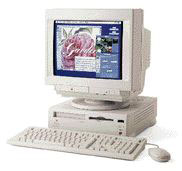 I lost a couple of auctions, reluctant to spend more than $20plus shipping on my tight budget. (I watched one of those auctionsspiral past $50 - tell me this wasn't a cult classic of a game!) Ifinally won an auction last year, but when the game arrived, it wasMaster of Orion II, not the original. Hoping to salvage something, Iinstalled it on one of my older machines, but MOO II was just asdisappointing on a Performa636CD in 2007 as it was on a Pentium II/266 in 1998.
A couple weeks ago, my dream of a decade came true for less than tenbucks. The mailman came, and I nearly snatched the package out of hishands and tore it open. Yes! The original Master of Orion CD for theMac! Looking around the house, I only had two Macs running the classicOS hooked up and running: My Power Mac 7100 and my G3/266 WallStreet.
While I knew that the 7100 would handle it just fine, there wassomething I wanted to try. The WallStreet was the same vintage as thePentium II that wouldn't run MOO on a bet. How would the G3 Macfare?
I bounced up and down on the futon in anticipation as the PowerBookspun up from sleep. I popped the disc in, held my breath, and. . . was greeted by an opening splash screen I hadn't seenin over ten years. Yes! Yes!
I wasn't disappointed either. Despite its somewhat primitivegraphics and total lack of all but the crudest MIDI soundtrack, Masterof Orion was every bit as fun and absorbing as I remembered. You reallydon't need the latest and greatest game or hardware to have a goodtime....
Now I want to try another experiment: My G4 Power Mac is currentlyonly running Tiger, but I could install Classic on it, no sweat. AndI'll bet up front that MOO will run fine on it, too.
I guess this is what worries me most about the various Snow Leopardrumors flying about the tubes of internets. Macs have long been knownfor their backwards compatibility. It's still present, in Mac OS X10.5, even if in a somewhat stunted form.
I'd hate to see Apple's legendary commitment to the Mac legacy lostfor a bit of Flash.... 
Further Reading