Yet Another Reason to Get a PowerBook
2001.01.31 - Dave Beekman
There are a number of reasons why a PowerBook is the perfect computer for writers.
Some of the advantages are obvious. The portability lets you take it to
places where your creative juices can flow, like the trendy coffee
house with the hotties behind the counter or the only quiet spot in a
house full of kids - that would be up on the roof, next to the chimney.
(Thank goodness for AirPort!)
The small, intimate size is an advantage too. A 500 MHz Power Mac G4 with a
couple of 19" monitors is just the thing for page layout or Photoshop,
but it's a little intimidating and writer's-block-inducing for banging
out columns or letters - kind of like composing haiku on the side of a
building with spray paint.
Then there's the coolness factor. What PowerBook owner doesn't like
to whip his or her unit out in a public place and start pounding away
on it? People cast envious glances at our equipment, 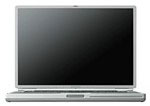 even if it's only a 540
with a mere 9-1/2 inch screen. If it's a well endowed Pismo, look out! We won't even
consider the Unobtanium G4
'book!
even if it's only a 540
with a mere 9-1/2 inch screen. If it's a well endowed Pismo, look out! We won't even
consider the Unobtanium G4
'book!
Those are all great reasons to own a PB, and any one of them should
be enough to compel you to whip out your plastic.
But there is another advantage that's rarely spoken of, and it's not
given the credit it deserves. I'm talking about how well a 'book
accommodates those among us who are, shall we say, keyboard challenged.
We're the ones who took typing in our sophomore year because we heard
there were girls in the class, and then managed to spend an entire
semester not only not learning how to type, but also getting
nowhere with the girls. Then, by faithfully applying that same kind of
discipline after high school, we managed to use up all of the free
synapses in our brains on other manual skills, so that now there is
absolutely no chance of our ever internalizing the dexterity needed to
navigate a keyboard.
Those of us in this elite cadre practice what is known as "hunt 'n
peck" typing, and we're proud to be called "hunt 'n peckers." But along
with our glacially slow WPM (words per minute), we also suffer from an
occupational disorder known as "hunt 'n pecker head," which is brought
on by constantly having to look up at the screen and down at the
keyboard. The primary symptom of this dreaded condition is a pain that
begins at the base of the neck and eventually works its way around your
entire head until your eyebrows hurt.
If this sounds familiar, help is on the way. Just plop a PowerBook
onto your lap, prop your chin up on a Coke can, and get ready for hunt
'n peck nirvana. The screen and keyboard are both right there in your
field of view, needing only a slight flick of the eyeballs to take in.
Now you can work for hours without your neck giving out and your head
rolling onto your left shoulder. You may even be able to keep at it
long enough to get a case of Carpal Tunnel Syndrome, just like a real
typist.
If your lack of typing skill has always been a pain in the neck, you
now have all the reasons you need to get a PowerBook.
Share your perspective on the Mac by emailing with "My Turn" as your subject.