Alan Zisman has reviewed Apple's
Boot Camp and Parallels
Workstation for Low End Mac, but before we publish those
reviews, we want you to be prepared for the dangers inherent in
having a computer running Windows connected to the Internet. We'll
post the Boot Camp and Workstation reviews later in the week.
Dan Knight, publisher
If you're a Mac user who's started to run Windows, whether using
Virtual PC or Guest PC (or other emulator) on a PowerPC Mac, or via
Apple's Boot Camp or Parallels
Workstation virtualization software
on a new Intel Mac, then you need to be aware of Windows' security
issues.
virtualization software
on a new Intel Mac, then you need to be aware of Windows' security
issues.
Opinions are divided about whether the Mac is less prone to
security attacks because it's more secure by design or simply
because the vast numbers of Windows systems make them a more
tempting target. I suspect the reality is a combination of the
two.
No matter why, though, the fact remains that going online
running Windows is putting your computer at risk. Online, a Windows
system becomes a target - whether it is a dedicated Windows PC or
Windows running (one way or the other) on Apple-branded
hardware.
If you've got the time and inclination to dig deep into Windows
security issues, you might like to pick up a copy of Andy Walker's
Absolute Beginner's Guide to Security, Spam, Spyware &
Viruses ($14.29 from Amazon.com).
If you lack the time or inclination to work through 360 pages,
here's the short version.
Do You Need to Be Online in Windows?
Do you really need to take your Windows system online? If your
Mac is your full-time computer and you only run Windows for a
specific piece of software - say Microsoft Access or Publisher or
AutoCAD, maybe there's no need for your computer to be online while
you're running Windows.
If your computer isn't online it won't be vulnerable to online
attacks. Unplug the network cable and turn off the WiFi access. Use
the Mac OS for Internet access.
But if you're going online when you're in Windows:
Start with a Firewall
A firewall monitors the data coming into (and in some cases out
of) your computer across the network, allowing you to block hackers
trying to get at your computer. Firewalls can be implemented in
hardware or software. If you're connecting to a wired or wireless
router, its Network Address Translation provides a hardware level
of firewall protection. As well, Windows XP Service Pack 2 (the
version of Windows you need to use with Apple's Boot Camp) includes
the Windows Firewall, which is turned on by default. (If you're
using an earlier version of Windows with emulation or
virtualization software, there is no built-in firewall
software).
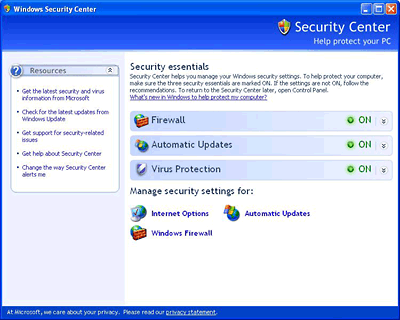
To check whether the Windows Firewall is turned on, look in the
Start Menu's Accessories/System Tools program group for the
Security Center (Windows XP SP2 only).
Better though, is a firewall that monitors both incoming and
outgoing signals. While a router and the Windows Firewall both
monitor incoming hack attempts, neither offer any protection
against malware that's been installed on your computer and is
trying to "call home".
Worth checking out is the free
Zone Alarm Basic firewall from Zone Labs. But be warned: when
you first start using Zone Alarm, be prepared for a lot of alerts
as it checks with you whenever a new (to it) piece of software
tries to access the Internet.
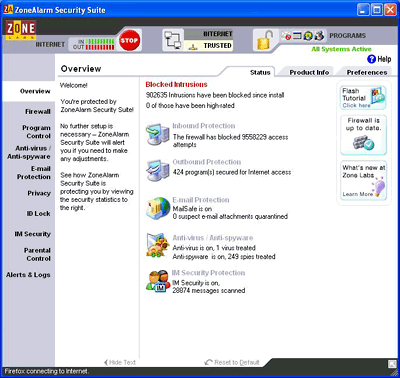
If you're convinced that program is trustworthy, you can allow
it access, perhaps checking Zone Alarm's option to always allow
that program access. But if Zone Alarm is warning you of a program
you didn't expect, you may choose to block it from accessing the
Net. (Note that every time you update, say, your antivirus program,
Zone Alarm will treat the update as a new program, again requiring
your permission before it can update its virus definitions).
Stay on Top of Viruses
The discovery of a few low-risk viruses affecting Mac OS X
made the news earlier this year, but Mac users can still boast of
the relative safety of their computer platform. With tens of
thousands of viruses, Trojans, and worms aiming at Windows systems,
antivirus protection is a must for Windows users.
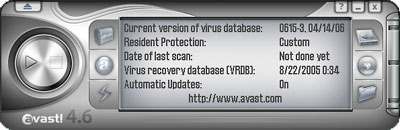 There are several
good free options, at least for noncommercial home users. Two I
like are AVAST and AVG. In both cases, be prepared to
register to get the serial number needed to keep the software
running beyond a 30-day trial. (You'll need to renew your
registration every year or so). Best-of-breed commercial products:
F-Secure Anti-Virus (US$65)
or Eset NOD32 ($40).
There are several
good free options, at least for noncommercial home users. Two I
like are AVAST and AVG. In both cases, be prepared to
register to get the serial number needed to keep the software
running beyond a 30-day trial. (You'll need to renew your
registration every year or so). Best-of-breed commercial products:
F-Secure Anti-Virus (US$65)
or Eset NOD32 ($40).
Even with up-to-date antivirus software running, Windows users
need to be cautious about email (and instant messenger) file
attachments - I've received files infected with viruses too new for
my antivirus software to recognize.
Be wary of unexpected attachments, even if they appear to come
from users you recognize; many viruses hijack a user's email
address book (particularly if they use Microsoft Outlook or Outlook
Express); so infection-bearing email can come from your
Windows-using friends without them knowing that their computer sent
it.
If in doubt, query the sender before opening an attachment.
Spyware Is This Year's Virus
When a Windows system starts acting sluggish or "funny", many
users immediately suspect that their computer has been infected
with a virus. More often these days, it's fallen prey to multiple
spyware and adware infestations, hijacking the Internet Explorer
start page, popping up ads (even when you're not using your
browser), "phoning home" to report what web pages you've visited
(aren't you glad you're blocking them with Zone Alarm?), and
more.
Far too many systems have multiple infestations, each running in
the background, sapping system resources, and causing system
instability and crashes.
Your system may pick up spyware or adware in a number of ways.
Many so-called free programs available for downloading are
"sponsored" by adware; the fine print of the End User License
Agreement (which you most likely agreed to without reading it) may
have mentioned that your were agreeing to install more than you
thought. Many popular peer-to-peer (music sharing) programs include
multiple adware installations, for instance.
Some online ads quietly install spyware when you click on them.
While Mac OS X generally requires explicit user permission
when installing software, if you're logged into Windows with
administrative privileges (which is how most people run Windows),
software can install itself without the user's awareness.
Microsoft is apparently designing its upcoming Vista operating
system to be more Mac-like in requesting user permission before
software can install itself. In the meantime, your Windows online
experience can be safer if you're logged on as a user with limited
permissions.
Sadly, many online ads warning that "your
system may be infected with spyware" install spyware while
pretending to scan your system.
Sadly, many online ads warning that "your system may be infected
with spyware" install spyware while pretending to scan your system.
Distrust all so-called anti-spyware software advertised online!
In general, anti-spyware software is not yet as sophisticated
and automated as antivirus software. If you're running Windows 2000
or XP, a good free choice is Microsoft's
Windows Defender, formerly known as Microsoft Antispyware.
(Yes, Microsoft - though it's based on a commercial program, Giant
Antispyware, purchased by Microsoft).
Users of older Windows versions are best-served with the free
Spybot Search and
Destroy. Spybot can be installed to run in the background,
warning the user when software tries to set itself up to run at
startup, though the options in the warning dialogue box can be hard
to click; it should be manually updated and run on a regular
basis.
While you can "roll your own" free suite of firewall, antivirus,
and anti-spyware software, Zone Lab's
Internet Security Suite (US$70, renewable annually) includes
all those components with a single interface. If you're shopping
for a commercial anti-spyware product, check out eTrust PestPatrol (US$40) or
PC Tools Spyware
Doctor (US$30).
Keep Up to Date
Make sure your firewall, antivirus, and anti-spyware software
are up-to-date; ideally you're using products that update
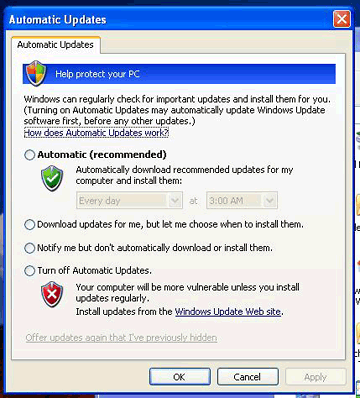
themselves. Recent Windows versions can be set to connect to
Microsoft Update and download and install critical updates
automatically in the background. It's well worth doing.
Minimize Microsoft
It may seem ironic to go to all this trouble to run Windows on
your Mac only to avoid Microsoft programs, but the reality is that
Microsoft's Internet Explorer browser and Outlook and Outlook
Express email software have been malware magnets. From time to time
you may need IE; some websites simply don't work right if accessed
on your Mac or using some other browser even in Windows. But going
online in Windows will be safer if you use Microsoft's browser and
email software as little as possible.
Consider making Mozilla
Firefox browser and Thunderbird email
software your defaults. Firefox is expandable with extensions; one,
IE Tab, can be load a page onto a Firefox tab using IE's browser
engine, letting you make use of IE to view pages that are
problematic in Firefox.
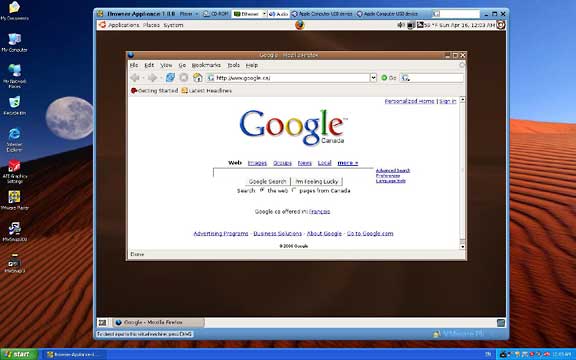
Or try this: VMware
produces virtualization software that can be used to run other PC
operating systems in a window within Windows or Linux - without the
performance penalties of traditional emulators that Mac-users may
be familiar with. VMware offers a free VMware Player that can be
used with a large number of pre-made operating system images.
Consider downloading it along with the Browser Appliance - a 280 MB
download that includes a stripped-down version of Ubuntu Linux and
the Firefox browser.
When you need to go online after using Boot Camp on your Mac, do
it through VMware's Browser Appliance. You may be running Windows,
but you're browsing using the far safer Firefox running on
Linux.
Or just reboot to the Mac OS.