This articles title reference is to Philip K. Dick's
Do Androids Dream of Electric Sheep?, the story from which
Blade Runner was adapted.
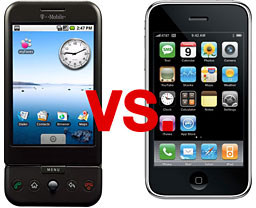
Marketing the HTC G1 as an iPhone
killer meant it was dead on arrival. Blog articles on 1.5 million
initial sales, when the manufacturer HTC talked about supplying a
maximum of 500,000 this quarter, raised the hype without a chance of
delivery. Already articles are appearing comparing the queues -
or lack of them - and when articles like Neil
Gaiman's appear about a T-Mobile franchise that is required to
advertise the G1 but can't sell it because it doesn't work in that
area, you know the G1 is doomed.
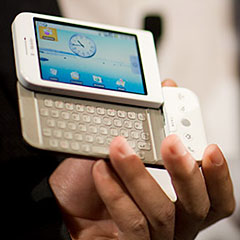
It didn't have to be this way. Walt Mossberg gave the G1 a
reasonable "First Impressions" review.
It was very clear there was no hope of launching the Android Market
with anything like the number of apps that Apple had in the July launch
of the App Store. T-Mobile knew that 3G would only be available in 19
markets, with another 10 on the way, compared to the 250 that AT&T
offers. So why go with a saturation strategy which can only lead to
negative stories?
What the G1 needed was strong word of mouth from niches poorly
served by the iPhone. The G1 has tight integration with Google's email,
contacts, and calendar programs, so users of those - and all the Apple
haters disenchanted with Windows Mobile - would have bought and
evangelised.
As it is, the
medialets figures for the first 24 hours of downloads showed strong
interest in the Android Market.
 Combined with the cheaper minutes and data packages and
restricting sales to the well served 3G markets could have given
T-Mobile a small but strong market to build out of. This should have
sold the 500,000 to gadget lovers and for Christmas, but few users are
willing to evangelise a new product against negative press.
Combined with the cheaper minutes and data packages and
restricting sales to the well served 3G markets could have given
T-Mobile a small but strong market to build out of. This should have
sold the 500,000 to gadget lovers and for Christmas, but few users are
willing to evangelise a new product against negative press.
However, Google doesn't really care. Android has been well reviewed
and passed over to Open Source, and the G1 hardware decisions were down
to others. The most crippling mistake, limiting the G1 to 70 MB of
third party apps at any one time when the average iPhone user has
already downloaded 18* apps, can be
changed in future designs, and it is those and the design wins in the
coming quarters that will decide the future of the platform.
There is an old maxim: "Follow the money." Google's money comes from
context sensitive ads, which on mobile also means location sensitive.
Google can serve those up as well on the iPhone as it can on Android,
and so it does not care which platform is more successful. Apple is too
busy making money from selling the iPhone to be interested in selling
ads, which is why Eric Schmidt is still on Apple's Board of
Directors.
Google's lack of interest in Android beating iPhone is seen in the
developer terms for the Android Market. Only free apps are available
now - distributed at no cost to the developer. Next year 30% of any fee
to cover costs, exactly as the App Store charges. Only charging $25 to
list an app, instead of Apple's $99, hardly makes for cutthroat
competition.
All Google wants is that Android is seen as better than Windows
Mobile. Manufacturers and carriers unable to sell the iPhone need an
alternative. If Android looks better, they won't take up Windows Mobile
where Microsoft would serve up the ads. Google's main interest in
Android is in making sure that Windows Mobile does not succeed. Giving
Open Source developers a home, so that they don't work on a less
Google-friendly mobile OS, is an added bonus.